When the jersey comes off

The sport is over. The nervous system isn't.

Retirement is not a calendar event. It is a nervous-system transition. The trauma reservoir, the sympathetic dominance, the broken sleep, the inflammation, the identity that has been running the person since age 10 — none of it clocks out when the last season does.

This page is for the athlete in the haze after the career ends — and for the long arc of work it takes to evolve into the next chapter of who they were meant to be.

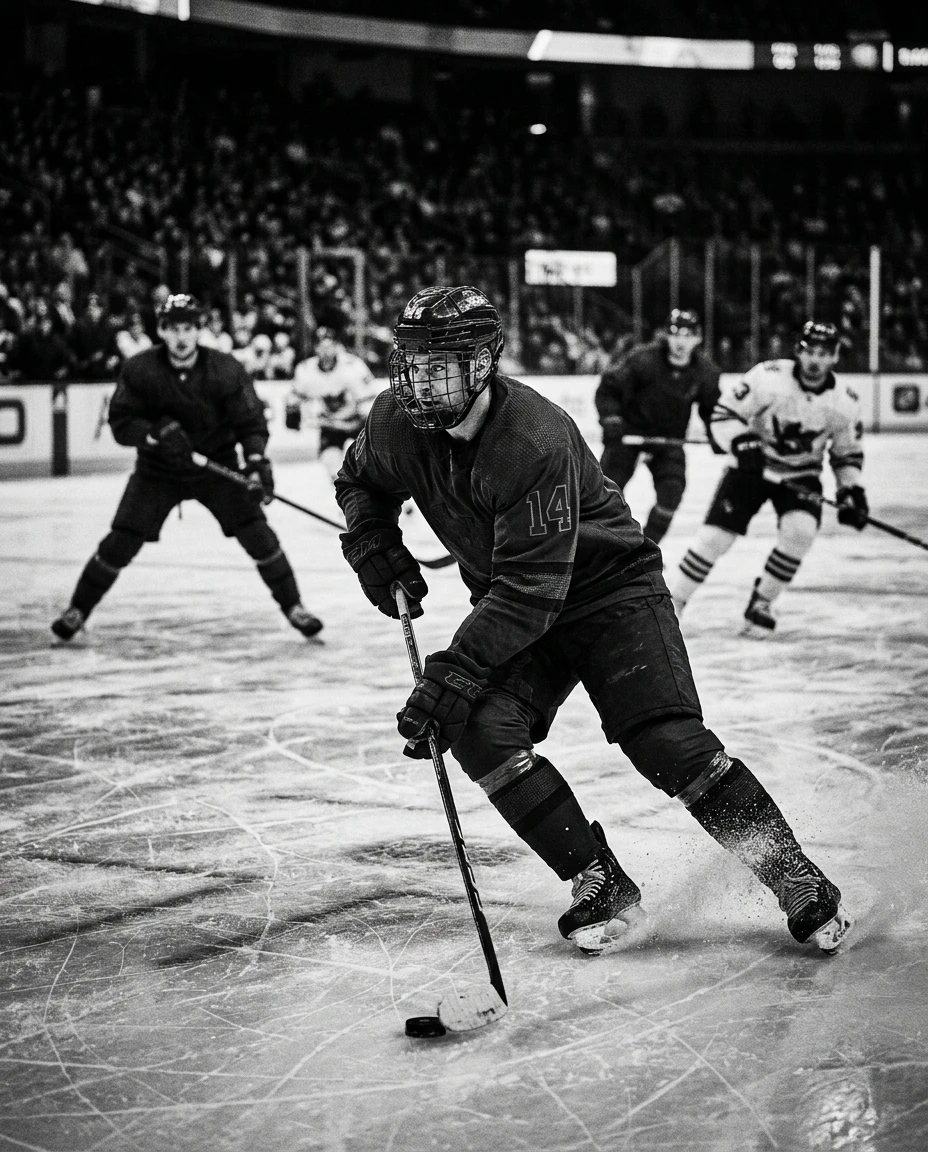
Athlete at rest — the nervous system still carries the program after the jersey comes off
Reservoir · Identity · Next chapter
What didn't clock out

The nervous system keeps running.

The body's operating system does not change just because the career schedule does. Whatever the nervous system was running during the playing years — it keeps running after the last game. The athlete does not feel "done." The athlete feels braced, amped, foggy, and unable to land.

01

Sympathetic dominance stays online..

The day the season ends or the jersey comes off, the underlying program does not. The nervous system has been running in a defended, sympathetic-dominant state for years — sometimes decades — and remains there after the last whistle. The body is still bracing for the next hit. The breath is still shallow. The jaw is still clenched.

02

High beta brainwaves persist..

Hypervigilance, scanning, and cognitive hyperactivity continue to run in the background. Sleep becomes shallow, fragmented, and non-restorative. The athlete lies in bed with the brain running highlight tape — and cannot drop into the deep delta window the body needs to repair, detoxify, and consolidate.

03

Neuro inflammation does not clear..

Repeated impacts, chronic sympathetic activation, and the inflammatory cascade the nervous system underwrites all keep the brain inflamed past the playing years. Without a regulated parasympathetic return, the brain does not get the time, the chemistry, or the lowered cortisol it needs to fully heal from the hits — and the inflammation stacks quietly underneath the recovery.

04

Brain-body detoxification stays inefficient..

Detox happens in deep sleep, in parasympathetic recovery, in the quiet of a regulated nervous system. None of those are available to the athlete whose system is still bracing. Glymphatic clearance slows, oxidative stress compounds, and the body carries the residue of every hit it could not finish processing in real time.

05

Chronic pain or numbness from unprocessed hits..

The hits the body took — and could not fully move through — leave residue in the brainstem and the tissue itself. Concussions, hard tackles, jarring decelerations, surgeries, falls, and years of small repeated impacts all store somewhere, even when imaging comes back clean and the obvious injury has long since healed. Years later, the retired athlete feels it as chronic pain that will not resolve, numbness that will not explain itself, or sensation in a limb that simply never came back. The brainstem is still running the unfinished processing on loop — and the body keeps reporting an event the conscious mind has finished with.

The chemistry crash

And the let-down.

After a career of persistent stress, adrenaline, and identity-spike, the body's chemistry crashes the day the jersey comes off. The mood shifts. The energy drops. The sleep worsens. The community disappears overnight. The body is still asking — by feel — for the source of the charge the sport used to provide.

01

The cortisol and endorphins crash..

A season — or a career — of persistent cortisol output, adrenaline surges, and natural endorphin release ends, and the chemistry that supported the body for years suddenly runs dry. The athlete feels the drop in mood, motivation, energy, and the ability to feel good without the sport providing it. Sleep becomes more broken. Mornings become heavier. The system does not know how to run without the chemistry the game gave it.

02

The community disappears overnight..

For years, the locker room, the team room, the training hall, the bus, the hotel — all of it generated a high-density community energy the nervous system quietly relied on. The day retirement happens, the room empties. The texts stop. The athletes move to other cities. The nervous system loses the regulation the group provided — and the loneliness lands as a felt sense, not just a thought.

03

The body no longer has somewhere to discharge..

The training, the practice, the competition — all of it was a daily regulation mechanism. The body used the work to discharge the charge of being alive. Now the charge is still there. The channel is gone. The system fills up with undeployed energy the athlete cannot put anywhere — and the haze, the heaviness, the inability to start anything are what show up in its place.

The athlete identity

You've been conditioned into this since age 10.

The player was built long before the career began. The parents, the coaches, the wins, the losses, the body, the subconscious — all of it wired identity into the sport. Retirement ends the role — but the role is what raised every other version of the athlete. They never got built. They are still waiting.

01

You have been the athlete since you were 10..

Decades of conditioning — from parents, coaches, teammates, the body, the identity — wired the nervous system into "I am my sport" before the prefrontal cortex had any say in the matter. By the time the career begins, the subconscious is already running a deeply grooved program: every victory is mine, every loss is mine, every public failure is mine. Retirement does not retire the program. The program still runs.

02

Self-actualization stops at the jersey..

When identity is locked to a role, the rest of the person — the writer, the entrepreneur, the father, the executive, the artist, the teacher, the healer, the partner — never gets the bandwidth to develop. The role protected those versions of the self. When the role ends, the versions that never had time to grow are suddenly all that is available — and the athlete does not recognize any of them.

03

The next chapter asks for a person you have not built yet..

The next chapter of the athlete's life requires a different version of themselves. A regulated version. An entrepreneurial version. A relational version. A version capable of receiving — not just producing. Building that version takes time, energy, and the absence of an old program running the system. That is what the subconscious work is for.

Why it stacks

And the haze sets in.

The sport disappearing, the community disappearing, the neural residue of every hit, and the long-horizon question about brain health — all of it lands at once. Of course the athlete is in a haze. Of course they are going through the motions. The system is not weak. It is overloaded.

01

You are missing the sport and the community..

The dopamine, the belonging, the structure, the adrenaline, the shared mission — all gone in the same season. The body still expects them. The calendar still expects them. They do not come. The day suddenly has no regulation in it, and the nervous system interprets the silence as more threat.

02

You are carrying the neuro depression of past injuries..

Every concussion, every hard hit, every jarring deceleration, every season the body never fully reset from — is still neurologically present. The injuries did not retire. They filed into the reservoir, into the dura, into the inflammatory cascade, into the subconscious program running underneath the new life. The depression associated with that accumulation shows up not because life is bad — but because the system is still processing what sport put into it.

03

Head injury history adds a longer horizon of worry..

For many retired athletes — and especially those with a documented concussion history — the long-term brain-health question becomes a daily background hum. What is happening in there. Whether the fog, the slow word-finding, the mood swings, the tiredness are signs of something bigger. The vigilance against the future becomes another layer of sympathetic load.

04

The haze becomes the new operating system..

It is understandable — and expected — that the retired athlete ends up in a haze. Going through the motions. Cannot start. Cannot feel much about what they do start. Cannot sleep properly. Cannot explain why. The system is not broken. The system is running too many old programs at the same time.

05

You feel like an outsider — you no longer know where you fit..

The athlete was one piece of a world that made sense — the community, the competition, the schedule, the identity, the belonging. When the career ends, the world does not come with you. The dinners feel awkward. The work parties feel foreign. The conversations are about things you have not been thinking about for years. You feel like an outsider — not because anything changed around you, but because the role that placed you in the room is gone.

06

It is exhausting to function, to start anywhere, to build a new pattern..

The system that used to run the morning, the training block, the meals, the recovery, the travel, the sleep — was wired by the sport. Without the sport, every part of the day is now a decision. The athlete is staring at a calendar that used to be filled for them. The smallest task — answering an email, walking into a coffee shop, sitting down to start a new practice — costs more energy than the body used to spend running a full session. The exhaustion is real. The nervous system is running a startup loop on every front.

07

You feel detached from your partner, your kids, your family..

The emotional bandwidth the athlete used to give to the people closest to them was routed into the sport — the training, the recovery, the competition, the resentment of the off-season, the highs and lows of every season. After retirement, the bandwidth is still depleted, and the partner, the kids, the parents are waiting. The nervous system has nothing extra to give. The athlete is present and unreachable at the same time.

The patterns retired athletes share

What the haze starts looking like.

Over the last decade I've worked with retired athletes on every level — from Olympic to high-school-collegiate. The patterns are consistent. And of course I've experienced them myself, the season I “retired” from collegiate sports and could not understand why I could not just feel okay.

01

Alcohol.

The most accessible regulator the nervous system finds once sport is gone. It drops the brace. It softens the hypervigilance. It recreates, briefly, the way the body used to feel walking off the field after a win. The dose creeps. The recovery hardens.

02

Drugs — recreational and prescribed.

Stimulants, sedatives, marijuana, opioids, sleep aids, anti-anxiety medications. Each one targets a layer the nervous system is no longer managing on its own. None of them clear the program. They cover the symptoms while the reservoir keeps compounding underneath.

03

Serial dating and intensity chasing.

The dopamine hit of a new relationship, a new social scene, a new city — each one briefly simulates the charge the sport used to provide. The high fades. The next one starts. The attachment patterns harden. The athlete searches outside themselves for what the nervous system asks them to address from the inside.

04

Extreme behavior.

Big risks. Big purchases. Big physical feats. Big opinions. Anything that briefly returns the nervous system to the high-output state it used to live in. The regulation through intensity becomes the new identity — and the new trauma source.

05

Shopping.

Retail dopamine. New gear, new hobbies, new wardrobes, new rooms. The purchases provide the spike the body used to get from competition. The spike fades. The cycle restarts.

None of these patterns are a moral failure. They are the nervous system's best short-term solutions to the absence of the charge the sport used to provide. The body is searching for the hit. Every behavior listed above is a version of that search.

Don't waste time being stuck

The strategies above are not sustainable. They are short-term stand-ins for the charge the sport used to provide — and they compound the load the nervous system is already carrying. The faster path is not better discipline. It is resetting the nervous system so it can produce its own regulation — clearing the reservoir, discharging the stored hits, dropping the sympathetic lock, and installing the new wiring at the subconscious level. That is how you stop being stuck — and step cleanly into the next chapter.

The work continues

Why the subconscious programming matters now.

Even after the playing years end, the work that made the playing years possible is the same work that makes the next chapter possible. Clearing the stored hits, desensitizing the nervous system to the old program, and installing the new wiring — at the level the person actually runs — is what allows the next version of themselves to come online.

01

The work continues after the jersey comes off..

The nervous system does not retire. The trauma reservoir does not retire. The subconscious programming does not retire. That is why the subconscious reprogramming work that got the athlete through the playing years is even more important once the playing years end — the system needs the same clearing, the same desensitization, the same new wiring it needed during the career.

02

Clear the reservoir. Drop the sympathetic lock..

Alpha Imprinting opens the subconscious window and discharges the stored hits — the concussions, the seasons, the losses, the injuries, the moments the athlete could not finish processing in real time. Beta drops. Cortisol settles. Sleep depth returns. The brain finally enters the parasympathetic recovery state required for the body to heal what sport left behind.

03

Build the next chapter from a regulated system..

Once the system is no longer running the old program — and no longer bracing for the next hit — the athlete becomes available to self-actualize into the next version of themselves. A regulated entrepreneur. A present father. A clear-eyed investor. A grounded partner. A community-builder instead of a community-member. The person the next chapter needs — built from inside the work.

04

You don’t have to live this way..

The exhaustion is not forever. The detachment is not who you are. The outsider feeling is not the rest of the story. Once the nervous system is reset, the bandwidth comes back. You can build a new career — and have the energy to start it. You can reestablish intimacy with your significant other, sit fully present with your kids, raise them with the skills they actually need from you, repair what got overlooked with the family. Mental energy comes back. Physical energy comes back. And you are no longer meeting any of it from an exhausted, frozen trauma-response state. The athlete you were built to be was real. The person you are meant to be in the next chapter is also real. You don’t have to live in the haze.

The takeaway

You are not in a haze because you are weak. You are in a haze because the program running the system is no longer the program the life requires. Clear the reservoir. Desensitize the nervous system. Install the new wiring. Build the next chapter from a regulated system.

When the playing years end

Start the next chapter.

A short call with Dr. Paige to map what the nervous system is still holding, what the subconscious programming work would look like for the post-career arc, and how to evolve into the version of yourself the next chapter needs.