Brain · Recovery · Return to play

Don't just clear the concussion. Decondition it.

A concussion is a nervous-system injury — not just a brain bruise. Standard return-to-play protocols clear the symptoms. They do not clear the subconscious program that keeps the athlete braced for the next hit, cortisol elevated, sleep broken, and reaction time slowed.

This page covers the latest research on sports concussion and suicide risk, the maladaptive homeostasis post-concussion syndrome leaves behind, and how Alpha Imprinting and red light therapy reset the system from the inside out.

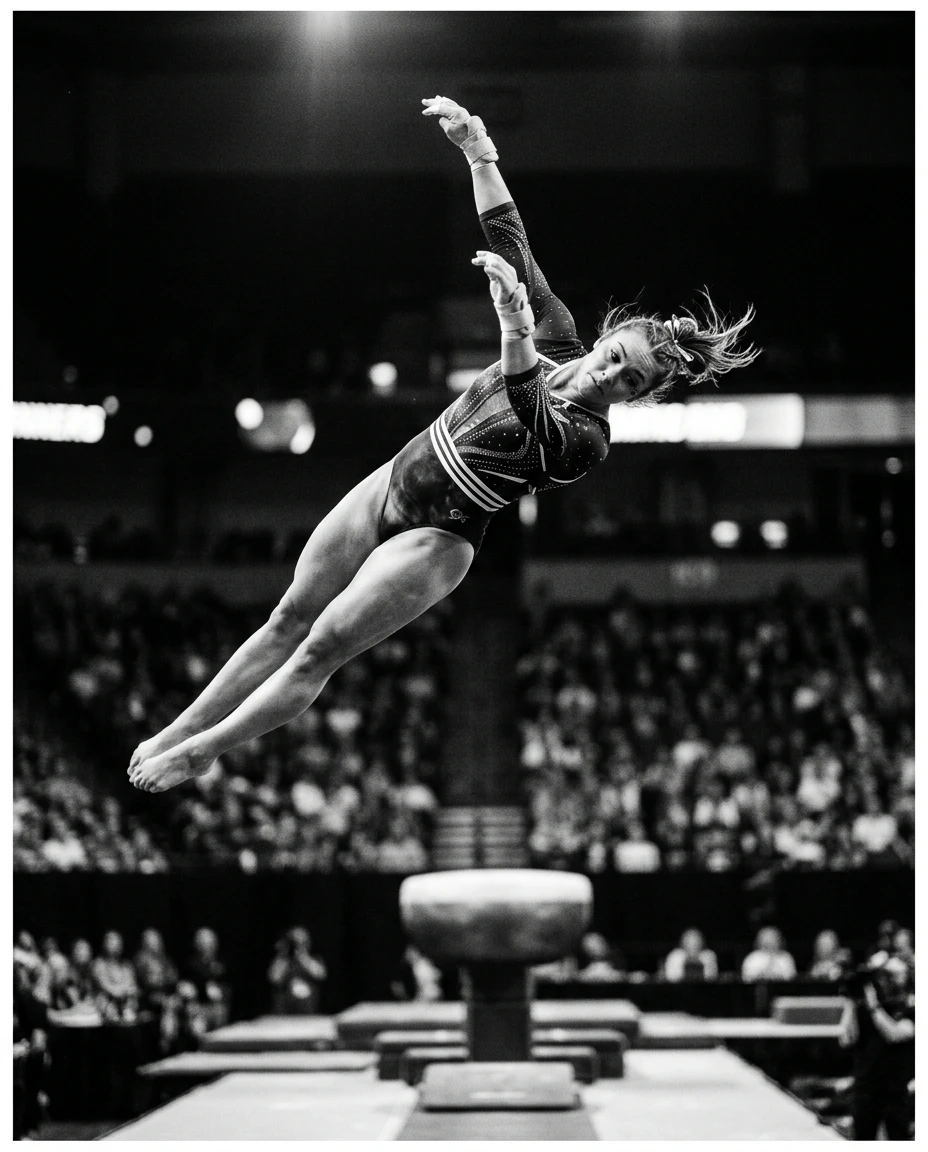
Female gymnast mid-air — precision sport where reaction time is safety
Reaction time is safety
The research

What the data actually says.

Concussion is no longer a "shake it off" injury. The peer-reviewed evidence — and now state legislation — is finally catching up to what athletes have been living with for years.

01
Finding

Twice the suicide risk after concussion.

A 2019 systematic review and meta-analysis in JAMA Neurology — pulling more than 700,000 patients diagnosed with concussion or mild traumatic brain injury — found a 2-fold higher risk of subsequent suicide compared to people who had never been diagnosed with one. The risk is real, it is measurable, and it does not disappear when the headaches do.

02
Finding

Colorado is finally legislating mental health into concussion care.

In 2026, Colorado lawmakers advanced SB26-060 — the Mental Health Training in Concussion Education bill — requiring youth sports coaches to complete mental-health training every other year and to notify parents of the mental-health risks tied to concussions. It builds on the Jake Snakenberg Youth Concussion Act of 2011 and finally acknowledges what the research has shown for years: concussion is not just a physical injury, it is a nervous-system injury with a mental-health tail.

03
Finding

Reaction time slows — and stays slow.

Sports-concussion research consistently shows measurable slowing of regional brain reaction time after a single concussion — and cumulative slowing with repeated hits. In aerial sports, figure skating, gymnastics, skiing, and other precision and combat sports, reaction-time loss is not just a performance problem — it is a safety problem. The athlete who can no longer recover a missed cue is the athlete who gets hurt again.

04
Finding

Sleep, cortisol, and the failure to come down.

After concussion, the nervous system often stays locked in a low-grade sympathetic-dominant state — elevated cortisol, disrupted sleep architecture, suppressed parasympathetic recovery. The brain literally cannot drop into the deep delta-wave repair window it needs to heal. Without intervention, athletes can stay in this maladaptive homeostasis for months or years after the impact is "cleared" by standard return-to-play protocols.

Sources: Fralick et al., JAMA Neurology, 2019 — Association of Concussion With the Risk of Suicide; Colorado SB26-060 — Mental Health Training in Concussion Education; Jake Snakenberg Youth Concussion Act (Colorado SB11-040).

Sex differences

Female athletes recover slower. And suffer harder.

The research is now consistent: female athletes get concussed at higher rates, report more symptoms, take longer to return to play, and are more likely to develop post-concussion syndrome than their male counterparts. Hormonal cycle, neck strength, mechanism of injury, delayed access to athletic-training care, and reporting differences all contribute — but the recovery gap is real.

For female athletes, the maladaptive “brace-for-the-next-hit” subconscious loop tends to run hotter and longer. Which is exactly why resetting it matters more — not less.

Reset the subconscious with Alpha Imprinting
~2×

higher concussion rates for female athletes than male athletes in sports with comparable rules (soccer, basketball, baseball/softball).

University of Utah Health · BMJ Open Sport Med
20 vs 10

median days to return to full contact play — women vs men in a Swedish contact-sport cohort.

Vedung et al.
76 vs 50

average days to recover from concussion in adolescents — females vs males across soccer, football, wrestling, and skiing.

BBC Future / adolescent cohort study
Higher

risk of post-concussion syndrome and longer-lasting symptom burden — including headache, sleep disruption, mood changes, and vestibular dysfunction.

AMWA · CHOP CIRP

Note: a 2020 NCAA-DoD CARE Consortium study of 1,071 collegiate concussions found no overall median difference in return-to-play days between sexes (13.5 vs 11.8) — but multiple sport-specific and adolescent studies continue to show meaningfully longer recovery and higher symptom burden for female athletes, particularly in contact sports.

A note from Dr. Paige
The negative results of sports concussions — and the loss of multiple friends to suicide — is what led me to find the resolution. So no one else would have to suffer from post-concussion syndrome, and no other family would have to lose a loved one to suicide after a hit they thought had healed.
Dr. Paige Roberts · Founder, Performance Neuro Training
The maladaptive homeostasis

The body cleared the hit. The subconscious did not.

Without deconditioning the concussion experience, the nervous system stays locked in a survival loop: I'm going to hit my head again, so I must be ready. That loop is the engine of post-concussion syndrome — and the reason recovery stalls.

01

The subconscious never got the memo.

The body finished healing — but the subconscious is still running the program: "I am going to hit my head again, so I must be ready." That program keeps the nervous system braced. Shoulders up. Jaw tight. Eyes scanning. Reaction time hijacked by hypervigilance instead of trained pattern recognition.

02

Hypervigilance blocks recovery.

Persistent high cortisol shuts down deep sleep, suppresses growth-hormone release, and keeps the brain inflamed. Neurons cannot fully repair myelin or restore mitochondrial function while the body is still in survival mode. The concussion experience becomes the lens — instead of a closed chapter — and post-concussion syndrome sets in.

03

Performance reaction time stays compromised.

Regional reaction-time slowing translates directly to performance reaction-time slowing. Half a beat late on a vault entry, a switch leap, a quad takeoff, a steep mogul line — and the body lands a position it was not ready for. The concussion that was supposed to be "done" becomes the next injury waiting to happen.

04

Aerial and figure sports carry the highest stakes.

In gymnastics, aerial skiing, freestyle, diving, figure skating, cheer, equestrian, and other rotational and aerial disciplines, a slowed nervous system is not just a missed score — it is the difference between a clean landing and a head-first impact. Deconditioning the concussion experience is not optional. It is the foundation of safe return to sport.

The resolution

Reset from the inside out.

Alpha Imprinting decommissions the subconscious program that keeps the brain braced — and gives the nervous system permission to actually recover.

01
Step

Alpha Imprinting clears the subconscious brace.

The protocol drops the nervous system into Alpha — the state where subconscious programming is accessible — and clears the stored "I am going to hit my head again" loop. You reprocess the impact, the fear, the moment, the days after. You discharge the held energy. You imprint a regulated baseline. The brace lets go.

02
Step

Cortisol drops. Sleep returns. The brain heals.

Once the subconscious is no longer guarding against the next hit, cortisol falls, the parasympathetic comes back online, and deep delta sleep becomes available again. That is when the brain actually repairs — myelin, mitochondria, vascular tone, inflammation. Recovery starts the moment the alarm shuts off.

03
Step

Reaction time and performance neural pathways come back.

With the trauma response cleared and the body re-imprinted to Alpha flow, regional reaction time normalizes and precise performance neural networks come back online. The athlete returns to sport in flow — not in flinch.

The resolution is not symptom management — it is a full reset of the subconscious program the concussion left behind.

See the method
Layered recovery

Red light therapy for brain repair and long-term protection.

Paired with Alpha Imprinting, transcranial red and near-infrared light enhances brain recovery at the cellular level — boosting neuronal ATP, reducing neuroinflammation, supporting myelin repair, and calming microglial over-priming. The result is faster post-concussion recovery, deeper sleep, and a meaningfully lower long-term risk of CTE.

Concussion recovery should not stop at "asymptomatic." It should go all the way to a fully repaired, fully regulated, fully re-imprinted nervous system.

Ready

Decondition the concussion. Reclaim the brain.

If you — or an athlete you love — is stuck in post-concussion syndrome, slowed reaction time, sleep disruption, or the silent hypervigilance that comes after a hit, tell Dr. Paige what is happening. The resolution exists.