ADHD · Dyslexia · HSP · The athlete brain

Neurodiversity is the gift.

ADHD, dyslexia, and high sensitivity are wired into a disproportionate number of elite athletes and high performers. The same neurology that fuels the competitive edge also fuels the perfectionism, the all-or-nothing thinking, the off-season drift, and the energetic overwhelm.

This page covers the research behind the athlete brain — and how Alpha Imprinting trains the gift without the shame loop, the identity collapse, or the burnout that usually rides with it.

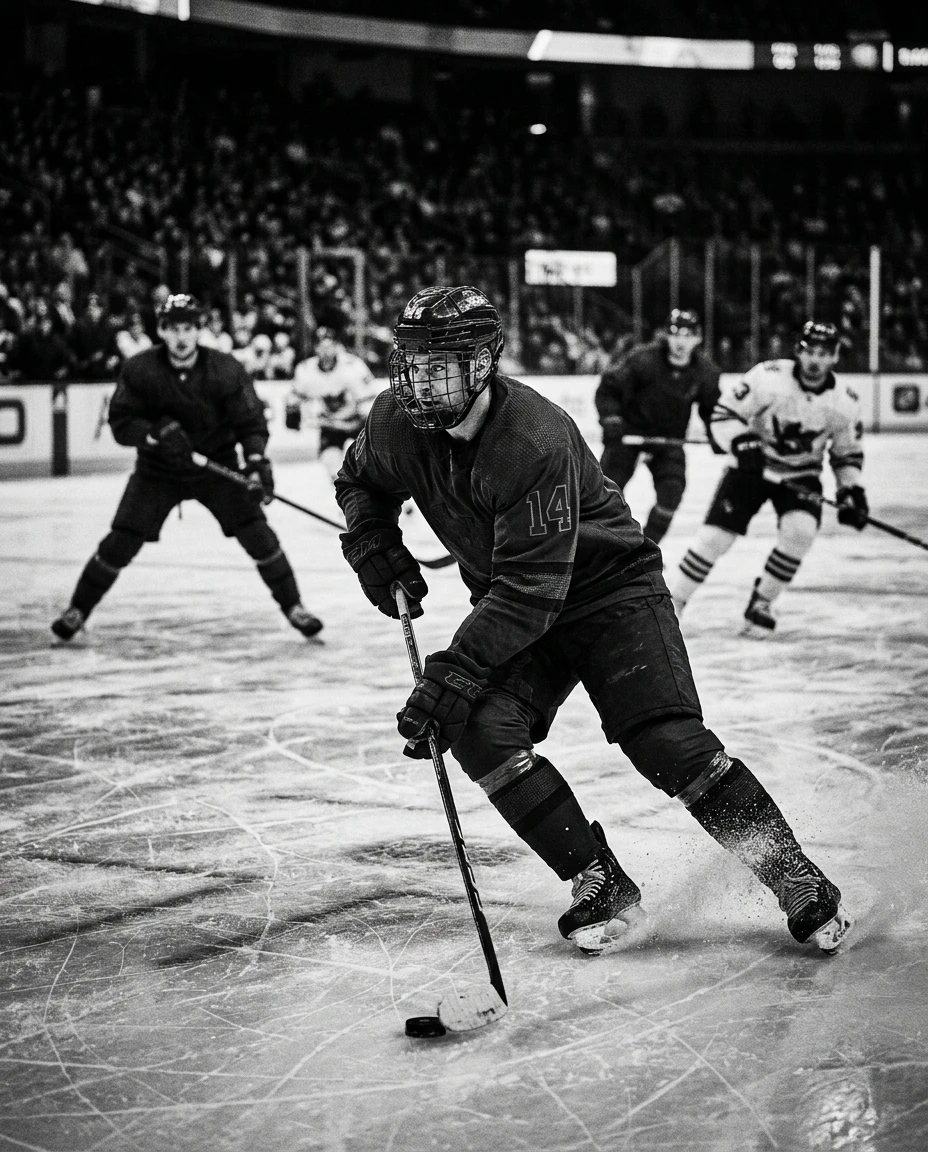
Hockey player on the ice with teammates — the neurodivergent brain reading the rink
The brain that reads the rink
ADHD in elite sport

A neurological advantage — and a hidden tax.

The hyper-focus, the urgency to move, the dopamine drive that keeps an athlete in the gym one more hour — that is the gift. The shame loop and the off-season free fall are the cost.

01

Elite athletes carry ADHD at a higher rate than the general population.

Peer-reviewed reviews and the International Olympic Committee's consensus statement on mental health in elite athletes acknowledge ADHD prevalence in elite sport sits at or above general-population rates — and in certain disciplines (swimming, action sports, combat sports, team sports with high-tempo decision-making) it runs noticeably higher. The hyper-focus, the urgency to move, the willingness to chase the next rep — that is the neurology, not a discipline problem.

02

The dopamine drive is the competitive advantage.

The ADHD brain is wired with a low resting dopamine baseline. Training, competition, the adrenaline of the start line — these are not optional. They are how the nervous system finally feels regulated. The same wiring that struggles to sit through a meeting is the wiring that can hold a 4-hour technical session, execute under pressure, and chase 1% gains for a decade.

03

And it is also the source of perfectionism and all-or-nothing thinking.

The flip side of dopamine-seeking is dopamine-crashing. The athlete wins and feels nothing the next morning. The athlete loses and the brain reads it as proof: "I am not enough." Perfectionism is not vanity — it is a neurological strategy to keep the dopamine on. Miss the standard and the shame loop fires: I should have done more, I should have been better, I should have won.

04

Routine is the medicine — until the season ends.

Structure, training blocks, travel schedules, and the rhythm of competition give the ADHD nervous system the external scaffolding it craves. Then the season closes, or an injury hits, and the scaffolding collapses overnight. Sleep slips. Food slips. Mood slips. The athlete describes it as feeling "lost," "flat," "like I don't know who I am" — because the dopamine engine just lost its track.

“The dopamine drive is not the problem. The shame loop is. We clear the loop and the gift gets to run.”

— Dr. Paige Roberts
Dyslexia & high performance

They didn't stay in school for the classroom.

The dyslexic brain reads pattern, space, motion, and three- dimensional geometry the way other brains read sentences. In sport, that is genius. In a textbook, it is exhaustion.

01

Dyslexia is far more common in high performers than schools admit.

The International Dyslexia Association estimates 15–20% of the general population shows some symptoms of dyslexia. Research on entrepreneurs, surgeons, architects, and elite athletes consistently surfaces rates well above the average — Julie Logan's landmark study found roughly 35% of US entrepreneurs identify as dyslexic. The dyslexic brain reads pattern, space, motion, and three-dimensional geometry the way other brains read sentences.

02

Sport is what kept many of them in school.

Talk to dyslexic athletes and the story repeats: reading and writing were a daily humiliation, but practice was the place they were finally smart, finally fast, finally seen. Eligibility requirements gave them a reason to stay. For a meaningful percentage of dyslexic kids — especially boys — sports participation is the difference between graduating and dropping out. The field, the mat, the pool, the wall is the classroom they were actually built for.

03

Spatial genius, verbal exhaustion.

The same neurology that lets a climber read a route on sight, a quarterback read a defense, or a gymnast feel a twist mid-air also makes a paragraph of text feel like work. By the time these athletes reach high school they have spent a decade burning extra cognitive fuel just to keep up — and that chronic load shows up as anxiety, low self-worth, and a private belief that they are "stupid." They are not. They are wired for a different intelligence.

The Highly Sensitive Athlete

Intuition is a nervous-system skill.

The HSP athlete feels the field, reads the coach, and senses the competition before anyone speaks. The gift is real. So is the cost of carrying everyone else's energy home.

01

Highly Sensitive People are 15–20% of the population — and overrepresented in sport.

Dr. Elaine Aron's research on Sensory Processing Sensitivity identifies roughly 15–20% of people as highly sensitive — wired to process sensory and emotional information more deeply than average. In athletes this shows up as elite proprioception, body awareness, and the kind of field-sense that looks like a sixth sense from the outside.

02

Intuition on the field is a nervous-system skill.

The HSP athlete feels where their teammates are without looking. They sense the gap in the defense, the shift in the pack, the moment the competition is about to break. In racing, they read the line before they ride it. In team sport, they pass before the eyes confirm. That is not magic — that is a deeply attuned nervous system processing micro-cues most people filter out.

03

They also read the room before anyone speaks.

HSP athletes know the coach is upset before the coach says a word. They feel the locker-room mood the moment they walk in. They pick up a teammate's anxiety, a parent's expectation, a competitor's confidence — and absorb it. The same sensitivity that powers the gift on the field becomes the burden off it. Without a way to manage the energetic input, the HSP athlete burns out.

The resolution

Alpha Imprinting trains the gift — without the cost.

We keep the dopamine drive, the spatial genius, and the deep sensitivity. We clear the perfectionism, the off-season identity collapse, and the energetic overwhelm.

01

Alpha Imprinting interrupts the perfectionism loop.

The protocol drops the nervous system into Alpha — the state where the subconscious is accessible — and clears the "I am only worthy when I win" program at the root. The dopamine-seeking is still there. The drive is still there. What leaves is the shame spiral that hijacks recovery, sleep, and the next training block.

02

Off-season and injury stop feeling like an identity collapse.

When structure comes from the inside instead of the calendar, the season ending is no longer a free fall. We imprint a regulated baseline the nervous system can hold without external scaffolding — so the athlete can rest, rehab, and re-enter without losing the self in between.

03

Energetic resilience: holding your own field.

For the HSP athlete, Alpha Imprinting builds the capacity to feel the room without absorbing the room. You keep the intuition. You keep the field-sense. You stop carrying the coach's mood, the parent's expectation, and the competitor's pressure home with you. That is what energetic resilience actually looks like.

04

The gift, without the cost.

Neurodiversity is not the problem to fix. The dopamine drive, the spatial genius, the deep sensitivity — these are the same wiring that makes the great ones great. Alpha Imprinting trains the gift to run cleanly: structured without rigidity, driven without shame, sensitive without overwhelm.

Your wiring is the advantage

Train the gift. Drop the shame loop.

Alpha Imprinting is a 10-week protocol designed for the neurodivergent athlete and high performer. We work with the wiring you already have — and clear what is in the way of using it.