In-season · Injury · Concussion · Retirement

The athlete numbing.

Substance use in athletes is not a character problem. It is a nervous-system problem. During the season it numbs the pressure. After injury it numbs the grief. After concussion it numbs the symptoms nobody could name. In retirement it numbs the silence after the crowd.

This page covers what the research shows across all four windows — and how Alpha Imprinting clears the root cause underneath, so the body no longer requires the substance to come down.

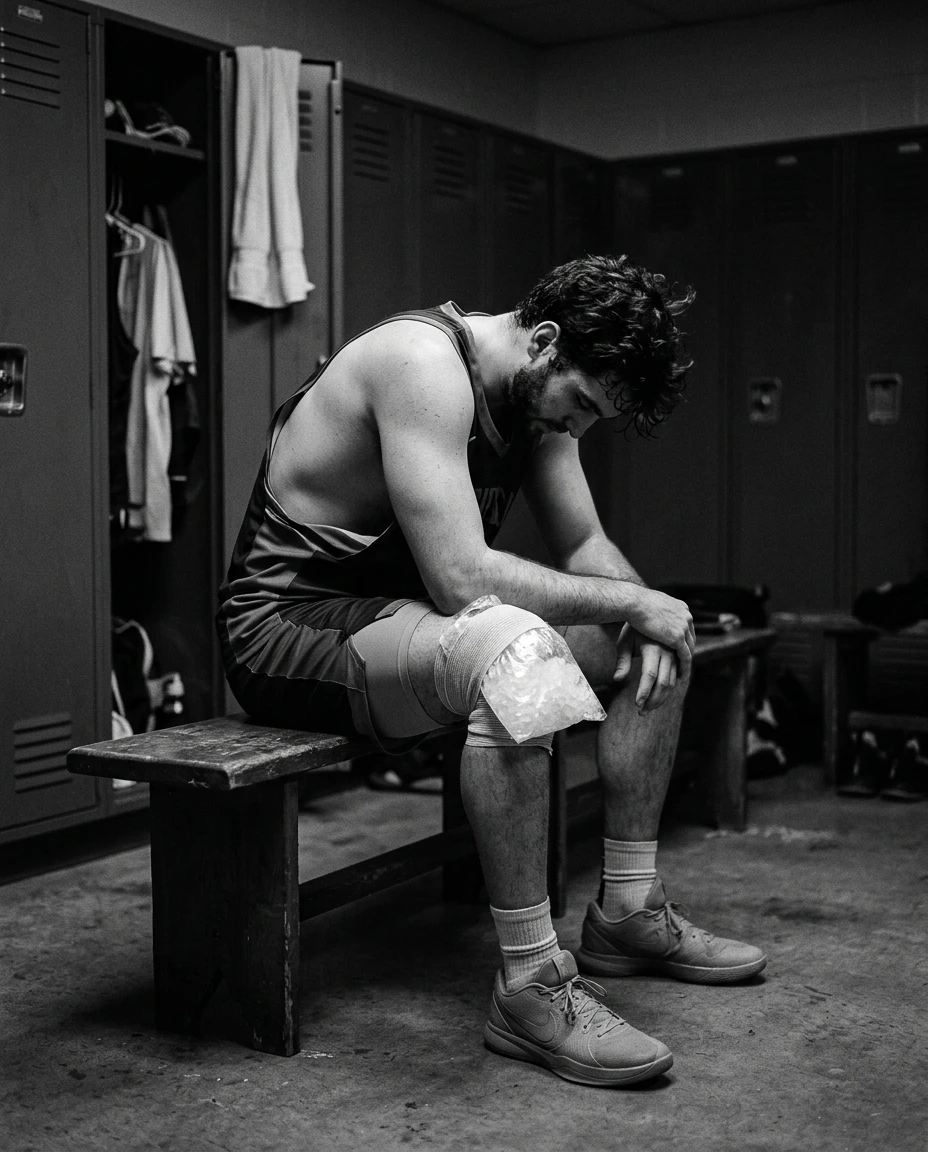
Solitary athlete sitting on a locker room bench after a game — the silence the substance is asked to fill
The silence after the crowd
During the season

A culture that teaches the off-switch before it teaches the feeling.

By the time most athletes are old enough to drink legally, they have been handed a substance, a supplement, or a ritual to manage the pressure their nervous system was never given language for.

01

Alcohol use in collegiate and pro athletes runs higher than non-athletes.

NCAA national studies have repeatedly found student-athletes binge drink at rates equal to or higher than their non-athlete peers — roughly 4 in 10 in any given two-week window. The bonding rituals, the post-game release, the celebration after the win and the medication after the loss are baked into the culture before an athlete is old enough to drink legally.

02

Stimulants and performance-pressure substances.

Caffeine, nicotine pouches, energy drinks, and prescribed and unprescribed stimulants are everyday tools in elite sport. They are framed as performance aids, but for many athletes they double as a way to override exhaustion, suppress appetite, and keep showing up when the body is asking to rest. The substance is doing what the nervous system can no longer do on its own.

03

Cannabis is the most common "off-switch."

Surveys of current and former elite athletes consistently report cannabis use at or above general-population rates, often described in the athlete's own words as the only thing that lets the brain stop running plays at 2 a.m. The training day ends. The nervous system does not. Something has to bring it down.

“We must feel to heal fully. The substance is not the problem. The unfelt feeling is.”

— Dr. Paige Roberts
After injury

The prescription is for the knee. The relief is for the identity.

An opioid does not just dull the surgical pain. It dulls the fear of losing the spot, the grief of missing the season, and the silence of being suddenly invisible to the team.

01

Opioid exposure starts in the training room.

A landmark study of retired NFL players (Cottler et al., Drug and Alcohol Dependence) found 52% had used opioids during their playing career, and 71% of those reported misuse. In college and high-school athletes, sports injury is one of the strongest single predictors of a first opioid prescription — and a first opioid prescription is one of the strongest predictors of later misuse.

02

The drug works on more than the joint.

An opioid does not just dull the surgical pain. It dulls the fear of losing the spot, the grief of missing the season, the rage at the body for breaking, and the silence of being suddenly invisible to the team. The prescription is for the knee. The relief the athlete actually feels is for the identity.

03

Alcohol use spikes during forced rest.

Athletes describe the injury period as the first time in years the dopamine engine has nothing to run on. Training is gone. The schedule is gone. The body that used to regulate the mood is on the couch. Alcohol, cannabis, and screens move in to fill the void — not because the athlete is weak, but because the nervous system is starving.

After concussion

Self-medicating the symptoms nobody could name.

A concussed brain has lower dopamine, disrupted sleep, altered mood regulation, and impaired impulse control — the exact conditions in which substances stop being a choice and start being a coping system.

01

Post-concussion substance use is its own epidemic.

Research on athletes with a history of concussion shows significantly elevated rates of alcohol misuse, cannabis use, and prescription misuse in the months and years following the injury. A concussed brain has lower dopamine, disrupted sleep, altered mood regulation, and impaired impulse control — the exact conditions in which substances stop being a choice and start being a coping system.

02

Self-medicating the symptoms nobody could name.

The headaches, the light sensitivity, the brain fog, the anxiety, the rage that comes out of nowhere — for years athletes were told this was "in their head." Alcohol quiets it. Cannabis quiets it. Opioids quiet it. By the time the medical system catches up to the diagnosis, the nervous system has already learned which substance turns the noise off.

03

Suicidality and substance use travel together.

CTE research and post-concussion mental-health studies repeatedly show overlap between repeated head trauma, depression, substance use disorder, and suicidality. Treating any one of these in isolation misses what is actually happening in the brain. The substance is not the root. It is the symptom of a nervous system that no longer has another way to regulate.

After retirement

The retirement party ends. The phone gets quiet.

Two decades of nervous-system regulation by training, structure, and competition stop on the same day. The first three to five years post-career is the highest-risk window in the entire athletic life.

01

Retirement is when the bill comes due.

Multiple international studies of retired elite athletes report substance-misuse rates well above the general population — across alcohol, cannabis, opioids, and stimulants. The literature on retired NFL, rugby, hockey, and Olympic athletes converges on the same finding: the highest-risk window is the first three to five years after the career ends.

02

The identity exits the body, and the substance moves in.

For two decades the athlete's nervous system was regulated by training load, team structure, competition, and the dopamine of the win. All of it stops on the same day. The retirement party ends. The phone gets quiet. The mirror still says "athlete" and the calendar says nothing. Substances are the fastest way to feel something in a body that used to feel everything.

03

Depression, grief, and the loss of purpose.

Up to 35–45% of retired elite athletes report symptoms of depression or anxiety in the post-career transition, with substance misuse the most common coping behavior. This is not personal failure. It is a predictable nervous-system response to losing the structure, the identity, the body, and the community in one move.

The reframe

Addiction is a habitual resourcing behavior.

Not a character flaw. Not a moral failing. A learned, fast, reliable way for the nervous system to shift state when nothing inside is delivering what the substance can.

01

Substances are a habitual resourcing behavior.

The drink, the pill, the pouch, the joint, the screen — at the level of the nervous system these are all the same move: a fast, learned way to shift state when the system has nothing else. They are not a character flaw. They are a resource the body reaches for because nothing inside is delivering what the substance can.

02

A numbing to not have to feel.

Underneath the substance is a feeling the athlete was never given permission to feel. The grief of the missed season. The shame of the loss. The fear of being seen as weak. The terror of who they are without the sport. The substance is not the problem. The unfelt feeling is.

03

And a numbing to pain that needs to be felt.

Pain that is felt moves. Pain that is numbed stays. Every dose buys a few hours of quiet and adds another layer to the charge underneath. Sobriety alone — willpower, white-knuckling, replacing one habit with another — does not touch the charge. It only moves the substance.

The performance cost

The substance is taking the edge before the opponent does.

Every dose is asking the body to give back the adaptation the training was supposed to lock in — and quietly downsizing the same brain the athlete depends on to read the play.

01

Substances tear down the training gains you fought for.

Alcohol blunts protein synthesis, disrupts REM and deep sleep, suppresses testosterone and growth hormone, and impairs glycogen replenishment for up to 72 hours after a single heavy night. Cannabis disrupts deep sleep architecture. Stimulants tax the adrenals and crash recovery. Every dose is asking the body to give back the adaptation the training was supposed to lock in.

02

They literally shrink the brain.

Long-term heavy alcohol use is associated with measurable reductions in gray-matter volume, hippocampal shrinkage, and accelerated cortical thinning on MRI. Chronic cannabis use is associated with changes in hippocampal and prefrontal volume, especially with early or heavy exposure. Combined with a history of concussion, the cost compounds. The same brain you depend on to read the play is the brain the substance is quietly downsizing.

03

Reaction time, focus, and decision-making fall off.

Reaction time is one of the most sensitive measures of substance impact. Alcohol slows reaction time the morning after — not just the night of. Cannabis impairs reaction time, working memory, and divided attention for hours to days. For an athlete whose entire competitive edge lives in the millisecond between perception and movement, the substance is taking the edge before the opponent does.

The resolution

Alpha Imprinting clears the root cause underneath.

The past traumas, stressors, and experiences that were too much to feel at the time got stored instead. We meet them now — in a regulated state — and let the body finally complete what it could not complete then.

01

We get to the root — the past traumas, stressors, and experiences that need to be felt.

Alpha Imprinting drops the nervous system into the Alpha brainwave state — the state where the subconscious is accessible — and we work directly with the original imprint underneath the urge. The grief, the shame, the fear, the moment something was too much to feel at the time and got stored instead. We do not bypass it. We do not talk around it. We meet it. Because we must feel to heal fully.

02

Calm the emotions and stress before they reach for the substance.

Alpha Imprinting is also a real-time regulation tool. When the pressure spikes — the bad game, the diagnosis, the news, the 11 p.m. crash after the crowd — the protocol gives the nervous system a way to come down without a drink, a pill, or a hit. The intensity does not have to be numbed. It can be moved.

03

Let go of the substance that is holding you back.

When the charge underneath releases, the substance loses its job. The athlete is not white-knuckling sobriety. They are simply no longer asking the substance to do work the nervous system can now do on its own. The training gains stop being undone overnight. The brain stops being downsized. The reaction time comes back.

04

A clean exit out of the sport.

For retiring athletes, Alpha Imprinting is the work that gets done before the season ends — not after the crisis hits. We imprint a regulated identity that is not dependent on the uniform, the schedule, or the next win. The career closes. The athlete does not.

Pain that is felt, moves

Stop numbing. Start feeling.

Alpha Imprinting is a 10-week protocol for the athlete or retired athlete ready to clear what is underneath the numbing — without willpower, without shame, and without losing the drive that made them who they are.